
Jonathan BealeDefence correspondent in Kyiv

 YURIY DYACHYSHYN/AFP
Ukraine’s biggest energy provider is living in permanent crisis mode because of Russian attacks on the grid, its chief executive has told the BBC.
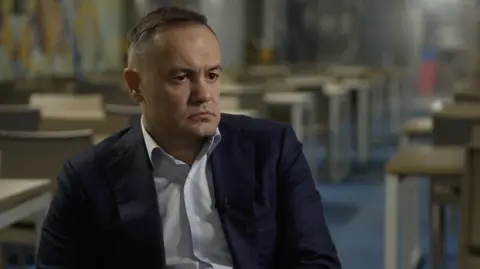
Most of Ukraine is suffering from lengthy power cuts as temperatures drop and Maxim Timchenko, whose company DTEK provides power for 5.6 million Ukrainians, says the intensity of strikes has been so frequent “we just don’t have time to recover”.
President Volodymyr Zelensky said on Tuesday that Russia knew the winter cold could become one of its most dangerous weapons.
“Every night Ukrainian parents hold their children in basements and shelters hoping our air defence will hold,” he told the Dutch parliament.
As the fourth anniversary of Russia’s full scale invasion approaches, Maxim Timchenko says Russia has repeatedly targeted DTEK’s energy grid with “waves of drones, cruise and ballistic missiles” and his company has found it difficult to cope.
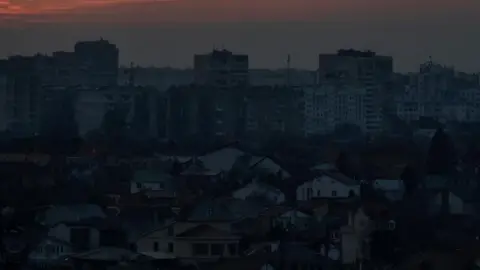
Tens of thousands of people in the southern city of Odesa have been without electricity for three days this week, following a co-ordinated Russian attack.
 Reuters
“Life has been difficult, but people are very supportive of each other,” says Yana, who is among those lucky enough still to have power. She has invited friends to her home to charge their phones.
Power outages also cut off heat and water supplies and Yana says those still connected to the grid have offered strangers the chance to wash or take a shower.
Across Ukraine electricity is being rationed – with supplies turned on for a few hours each day.
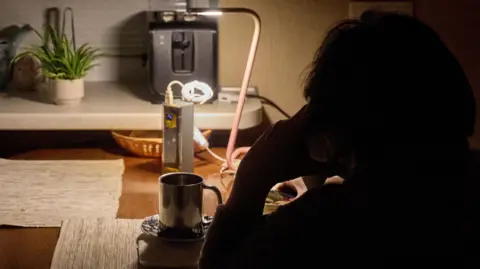
Many Ukrainians rely on power banks and generators as a back-up, and the sound of generators in the capital is now more constant than the air raid warnings.
Kyiv resident Tetiana says the first thing she does in the morning is to check her phone to find out the daily schedule for when her power will be switched on. Like many she has invested in power banks to make life more bearable:
“You need to remember when you leave home to leave the powerbanks on so that you have them charged when you get back home.”
 Shutterstock
About 50% of Ukraine’s energy is currently supplied by three large nuclear power plants in central and western Ukraine. But the network that transfers that power has been severely damaged.
DTEK runs about 10 power stations, most of them fuelled by coal.
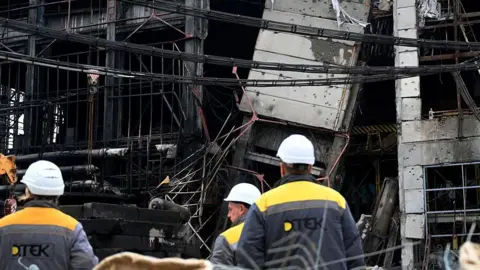
One was recently targeted by five 5 ballistic missiles and Mr Timchenko said some of their power plants and sub stations had been attacked “every three or four days”.
“I don’t remember a single day when I had no reports about some damage to our grid.”
 Matthew Goddard/BBC
Finding spare parts to repair damaged equipment has become a significant challenge.
The energy provider used to be able to source equipment from within Ukraine, but now it has to scour the ret of Europe for replacement parts.
This year DTEK has had to spend $166m (£123m) on repairing its damaged thermal power plants and coal facilities.
“We will not give up,” Maxim Timchenko insists: “We have a responsibility to millions of mothers to have power and heat”.
DTEK’s origins are in the Donbas in Eastern Ukraine where the fighting is fiercest and where power supplies have been disrupted the most.
Eight of its engineers have been killed doing their job.
“Every day they risk their lives to keep power in this area,” Mr Timchenko said.
Additional reporting by Anastasia Levchenko and Kyla Herrmannsen.
https://ichef.bbci.co.uk/news/1024/branded_news/c2f8/live/5cf15330-da7a-11f0-b60a-5db3d22facb6.jpg
2025-12-16 12:54:00